
A washing machine that’s leaking water is one of those problems that feels urgent the moment you see it. Water pooling on the laundry room floor is hard to ignore. The good news is that not every leak means a broken machine. Some causes are simple and safe to check yourself. Others point to a mechanical issue that’s better left to a technician, especially when electrical components or water lines are involved.
Here’s how to figure out which situation you’re dealing with.
Why Is My Washing Machine Leaking Water?
Leaks usually come from one of a handful of common sources. Where the water is coming from and when it happens during the cycle can help narrow down the possible cause.
Damaged or Worn Door Seal (Front-Load Washers)
Front-load washers rely on a rubber gasket around the door to keep water inside the drum. Over time, this seal can crack, tear, or collect grime and debris that prevents it from forming a tight seal.
If you notice water escaping from the front of the machine near the door during a wash or spin cycle, the door seal is one of the first things worth checking.
Loose or Cracked Water Inlet Hoses
The hoses that bring water into the machine can loosen over time, especially if the washer has been moved, bumped, or is vibrating more than usual during cycles.
A damaged inlet hose or connection can leak while the washer is filling and, depending on the connection, may also leave water behind when the machine is not running. This can lead to water collecting behind or underneath the washer without being noticed right away.
Overloading or Using Too Much Detergent
Sometimes what looks like a mechanical leak may be related to how the machine is being used. Overloading the drum or using more detergent than recommended can create excess suds and cause water or suds to escape around the door seal or through the detergent drawer.
If this may be the cause, correct the load size and detergent amount before the next use and follow the manufacturer’s recommendations.
Clogged or Damaged Drain Pump
If water is leaking from underneath the machine, particularly during the drain or spin cycle, the drain pump or its hose connections may be cracked, loose, or blocked by debris such as coins, lint, or small items.
Because the pump is an internal component, ongoing leaks from this area usually require professional diagnosis.
Worn Tub Bearings or a Cracked Tub
This is a less common cause, but it can be a more serious one. If you’re hearing grinding or unusual noises along with the leak, it may point to worn tub bearings or a damaged inner or outer tub.
This type of repair can be more involved, so getting the cause properly diagnosed before buying replacement parts can help avoid spending money on the wrong repair.
Simple Checks You Can Safely Do First
Before assuming the worst, there are a few things you can check yourself:
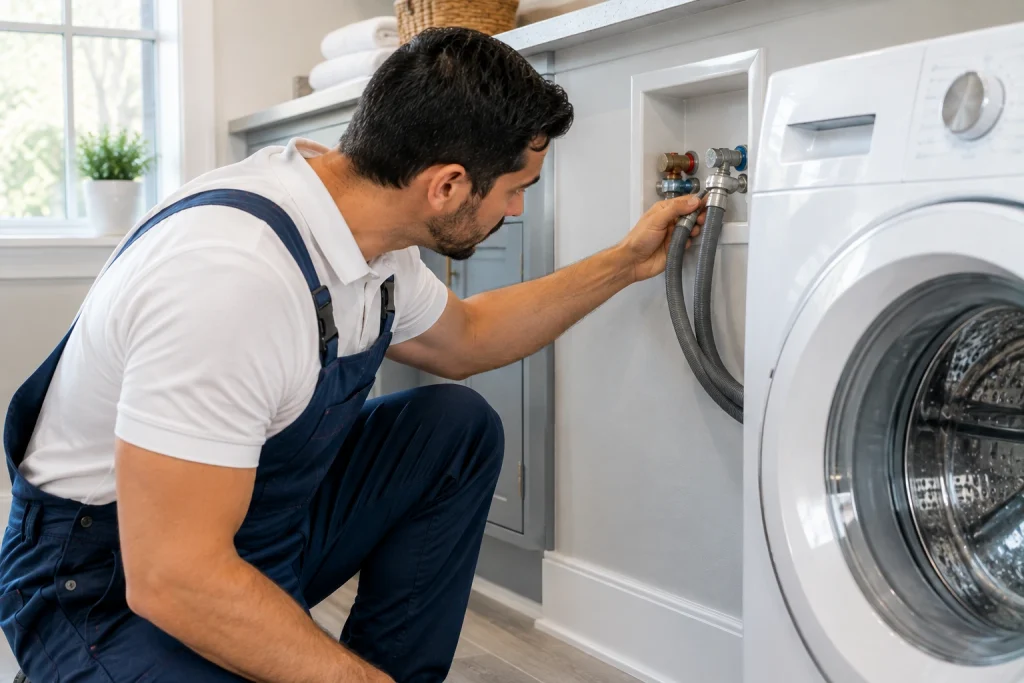
- Disconnect the machine from power before inspecting accessible hoses or the door seal. Do not touch electrical components or wiring.
- Check that the water inlet hoses are securely connected at both the wall and the machine.
- Inspect the door seal on a front-load washer for visible cracks, tears, or trapped debris.
- If overloading or excess detergent may be contributing to the problem, correct the load size and detergent amount before the next use.
- Look around and underneath the machine for signs of water. This can help you determine whether the leak appears to be coming from the front, back, or bottom.
If the leak continues after these checks, or if you notice grinding noises, a burning smell, repeated breaker trips, or visible electrical damage, stop using the machine and have it inspected.
When a Leaking Washer Needs a Professional Repair
A professional repair may be needed when:
- The leak continues after checking accessible hoses and the door seal
- You hear grinding, banging, or unusual mechanical noises
- The leak appears to be coming from underneath the machine near the pump or other internal components
- You suspect a cracked tub or another internal component
- There’s a possible electrical issue, such as a burning smell, repeated breaker trips, or visible damage near wiring
Attempting to open the outer casing or replace internal parts such as a pump or tub without the necessary experience can turn a moderate repair into a larger problem and may create a safety risk.
The Electrical Safety Authority (ESA) advises that electrical equipment exposed to water can be dangerous if it is re-energized without proper evaluation. ESA also advises against plugging in or using electrical appliances that have become wet until they have been properly serviced.
If water may have reached electrical components, stop using the appliance and have it assessed by an appropriate qualified professional before using it again.
Is It Safe to Keep Using a Leaking Washing Machine?
Generally, it’s best not to keep using a washing machine when the source of a leak is unknown.
Continuing to run a leaking washer can cause water damage to your flooring or the room below. If the leak is related to a failing pump, bearing, tub, or electrical component, continued use may also make the problem worse.
If you’re not sure whether the machine is safe to operate, pause use until the source of the leak has been identified.
Washing Machine Repair Service in Oshawa & Durham Region
If your washing machine is still leaking after the accessible checks above, professional diagnosis can help identify the actual cause and determine the appropriate repair.
For information about washing machine repair in Oshawa and the surrounding Durham Region, see our Washing Machine Repair Service in Oshawa page or contact us about your repair needs.
Learn More About Washing Machine Repair →
Frequently Asked Questions
A leak that appears during the spin cycle can be related to the drain pump, drain hose connections, door seal, or another component that is affected by the movement and vibration of the machine.
Check the accessible hose connections and door seal first. If the leak continues during spin, a professional may need to inspect the washer to identify the source.
Water near electrical components can create a safety concern, particularly if wiring or electrical parts have been exposed to water.
If you notice a burning smell, repeated breaker trips, visible electrical damage, or water reaching electrical components, stop using the washer and have it inspected before using it again.
It depends on the age of the machine and what is causing the leak. A damaged hose or door seal may be relatively straightforward to repair, while a cracked tub or major bearing problem can involve a more extensive repair.
Once the cause is identified, a repair professional can help you compare the repair cost with the age and condition of the appliance.
Start by checking where water is appearing around the machine without running another cycle. Look at the accessible inlet hoses, connections, drain area, and the floor around the washer for signs of moisture.
If the source is not clear, a professional can help determine whether the water is coming from the washer or nearby plumbing.