
If you open your dishwasher after a cycle and find a pool of water sitting at the bottom, there may be a problem somewhere in the drainage system. Sometimes it’s a simple clog. Other times, a worn or damaged component may be preventing the dishwasher from draining properly.
Here’s how to identify the possible causes, what you can safely check yourself, and when professional repair may be needed.
Common Causes of a Dishwasher Not Draining
Clogged Filter
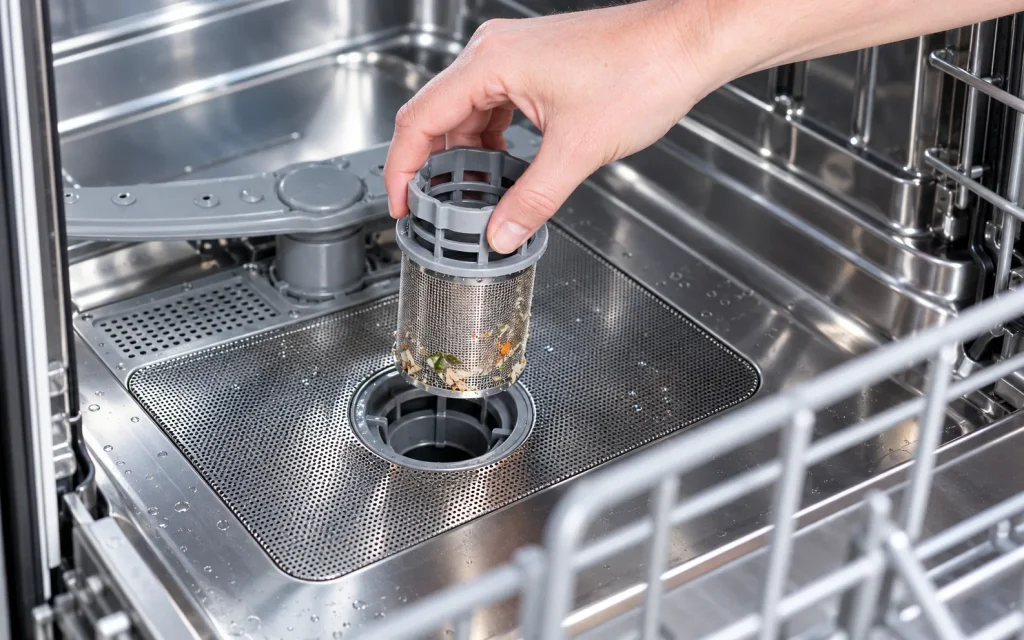
Most dishwashers have a filter at the bottom of the tub that catches food scraps and debris. Over time, it can become clogged and restrict water flow.
A dirty filter is one of the first things worth checking when your dishwasher isn’t draining. Many dishwasher filters can be removed and cleaned, but it’s best to follow your manufacturer’s instructions.
Blocked or Kinked Drain Hose
The drain hose carries wastewater from the dishwasher to the household drainage system. If the hose becomes kinked or blocked, water may not drain properly.
A partial blockage can sometimes allow some water through while leaving standing water at the bottom of the dishwasher after a cycle.
Clogged Air Gap or Garbage Disposal Connection
Some dishwashers drain through an air gap near the kitchen faucet or connect to a garbage disposal.
If the air gap becomes clogged, it can prevent water from draining properly. A blocked disposal connection can cause similar problems.
If a garbage disposal was recently installed, an unopened dishwasher inlet knockout plug may also prevent proper drainage.
Not every dishwasher has an air gap or garbage disposal connection, so this depends on your kitchen’s plumbing setup.
Worn or Damaged Drain Pump
The drain pump helps move wastewater out of the dishwasher. If the pump is damaged, blocked, or no longer working properly, water may remain inside the tub.
You might hear unusual humming during the drain cycle, or the dishwasher may fail to drain without making an obvious noise.
These symptoms don’t always mean the pump has failed. A blockage or another component may be responsible, so proper diagnosis is important before replacing parts.
Faulty Check Valve
Some dishwashers use a check valve to help prevent drained water from flowing back into the tub.
If the valve becomes stuck or damaged, water may return to the dishwasher after the drain cycle.
A faulty check valve is one possible cause of recurring standing water, although the exact drainage design varies by dishwasher model.
Safe Checks You Can Do Yourself
Before checking accessible parts of the dishwasher, disconnect it from power. Avoid touching wiring or internal electrical components.
If electrical parts may have been exposed to water, stop using the appliance until it has been properly assessed. The Electrical Safety Authority (ESA) warns that electrical equipment exposed to water can be dangerous if it is re-energized without proper evaluation.
Once the dishwasher is safely powered off, you can try these basic checks:
- Remove standing water carefully. Use a cup or sponge to remove excess water from the bottom of the tub.
- Check the dishwasher filter. If your model has a removable filter, take it out and rinse away trapped food debris according to the manufacturer’s instructions.
- Look for visible drain hose kinks. Check only accessible sections of the hose without pulling out or dismantling the dishwasher.
- Inspect the air gap if your kitchen has one. Follow the manufacturer’s instructions for checking and cleaning accessible parts.
- Check the garbage disposal connection. If your dishwasher connects to a disposal, make sure the disposal’s drain path is not visibly blocked. Follow the disposal manufacturer’s safety instructions and never reach inside it.
If these checks don’t identify the cause, the problem may involve the drain pump, check valve, or another internal component.
Avoid removing electrical panels or attempting internal repairs without the necessary experience.
When to Call a Professional
Some dishwasher drainage problems need more than basic cleaning or inspection.
Professional diagnosis may be appropriate if:
- Water remains in the dishwasher after you’ve checked the accessible filter and drainage connections.
- You hear unusual humming or other noises during the drain cycle.
- The dishwasher doesn’t appear to activate its drain pump.
- Water is leaking from underneath the appliance.
- You suspect a damaged drain pump, check valve, or another internal component.
- You’re uncomfortable accessing parts that require removing panels or disconnecting plumbing.
Replacing a drain pump or internal valve may involve electrical connections, plumbing components, and disassembly.
If you’re unsure about the cause, having the dishwasher inspected can help avoid unnecessary part replacements or additional damage.
Frequently Asked Questions
A dishwasher that fills normally but won’t drain may have a clogged filter, blocked drain hose, restricted air gap, or a problem with its drain pump.
The exact cause depends on the dishwasher model and drainage setup. Checking accessible filters and connections is a reasonable starting point.
Some dishwasher models retain a small amount of water in the sump or drain area between cycles.
However, standing water covering the bottom of the tub after a completed cycle may indicate a drainage problem. Check your manufacturer’s instructions to understand what’s normal for your model.
It’s better to avoid starting another wash cycle until you understand why water is remaining in the dishwasher.
Running another cycle without resolving the problem may lead to additional drainage issues or possible overflow.
If basic cleaning doesn’t resolve the problem, professional inspection may be needed.
The cost depends on what’s causing the drainage problem.
Cleaning an accessible filter may not require replacement parts. A blocked hose, damaged drain pump, or faulty valve may involve additional labour and parts.
A professional diagnosis can help determine whether repair is worthwhile based on the dishwasher’s age, condition, and the work required.
Need Help With a Dishwasher That Won’t Drain in Oshawa?
If you’ve checked the accessible filter and drainage connections but your dishwasher still isn’t draining, professional diagnosis can help identify the cause and determine the appropriate repair.
For more information about dishwasher repair in Oshawa and the surrounding Durham Region, visit our Dishwasher Repair Service in Oshawa page.