
Most refrigerator problems don’t happen overnight. The appliance usually gives small warning signs before it stops working properly. You might notice extra frost in the freezer, unusual noises, food that isn’t staying as cold as it should, water pooling underneath, or a fridge that seems to run constantly. Paying attention to these early signs can often prevent food from spoiling and may even reduce the cost of repairs.
Refrigerator problems can usually be traced back to a few common causes, including a worn door seal, blocked air vents, dirty condenser coils, a faulty thermostat, or a problem with the defrost system. Below are some of the most common refrigerator problems, what usually causes them, and a few simple checks you can safely carry out before deciding whether professional help is needed.
Refrigerator Not Cooling Properly
This is one of the most common refrigerator complaints. When food starts spoiling faster than it should or drinks aren’t staying as cold as expected, something may be preventing the appliance from maintaining the correct temperature.
Common causes include:
- Blocked air vents that prevent cold air from circulating evenly between the fridge and freezer compartments
- Dirty condenser coils covered with dust or pet hair, making it harder for heat to escape efficiently
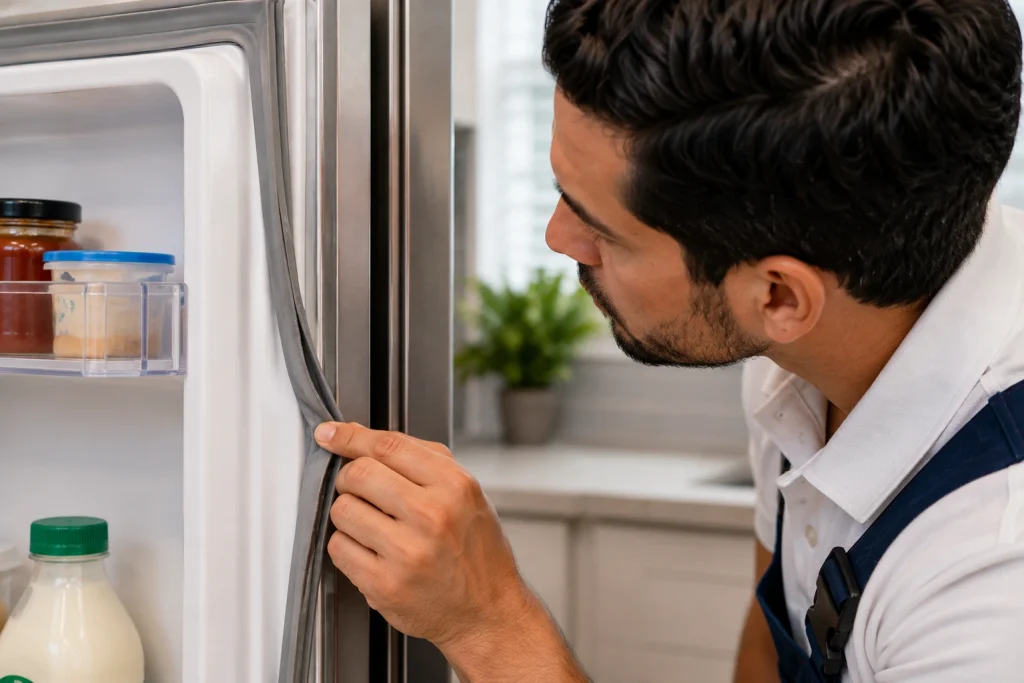
- A damaged or worn door seal that allows warm, humid air to enter continuously
- A faulty thermostat that no longer measures the internal temperature accurately
Before arranging a repair, check the rubber door seal for cracks, gaps, or sections that no longer close tightly. Even a small gap can allow warm air to enter every time the compressor cycles.
Make sure food containers aren’t blocking the internal vents. If the condenser coils are accessible, gently remove dust with a vacuum or soft brush. Dust can insulate the coils and force the compressor to run longer while making cooling less efficient.
Freezer Not Freezing or Cooling Properly
The freezer compartment can develop its own cooling problems even when the rest of the refrigerator seems to be working normally. When food starts to soften or ice cream no longer stays firm, the same underlying causes may be responsible, including blocked vents, dirty coils, a worn door seal, or a faulty thermostat.
According to Health Canada, a freezer should be kept at -18°C (0°F) or colder to keep food safely frozen. If you have a freezer thermometer, checking the actual temperature can help you determine whether the appliance is maintaining a safe freezing temperature.
You can also check the freezer door seal and make sure stored food isn’t blocking the vents. If these basic checks don’t resolve the problem, a professional inspection may be necessary.
Water Leaking from the Refrigerator
A puddle under or inside the refrigerator can look alarming, but the cause is often relatively simple. One common reason is a clogged or frozen defrost drain. This small channel carries condensation away from the appliance. When it becomes blocked, water can back up inside the refrigerator or onto the floor underneath.
A damaged water line on models with an ice maker or dispenser can also cause leaking. A door seal that isn’t closing properly may allow excess moisture to build up and eventually result in water around the appliance.

Check that the refrigerator is sitting level and that the drain area at the back of the interior isn’t blocked with debris. If the leak continues, professional diagnosis can help identify the source before it causes further damage.
Frost or Ice Buildup Inside the Freezer
A light layer of frost is normal. Heavy frost, however, usually indicates that something isn’t working as it should.
When thick ice begins covering shelves, walls, or the door opening, warm, moist air may be entering the freezer. This commonly happens when the door seal is damaged or no longer creates a proper seal. Moisture from the air freezes when it reaches the cold interior, gradually forming thicker layers of ice.
A defrost system that isn’t operating correctly can also cause excessive frost buildup.
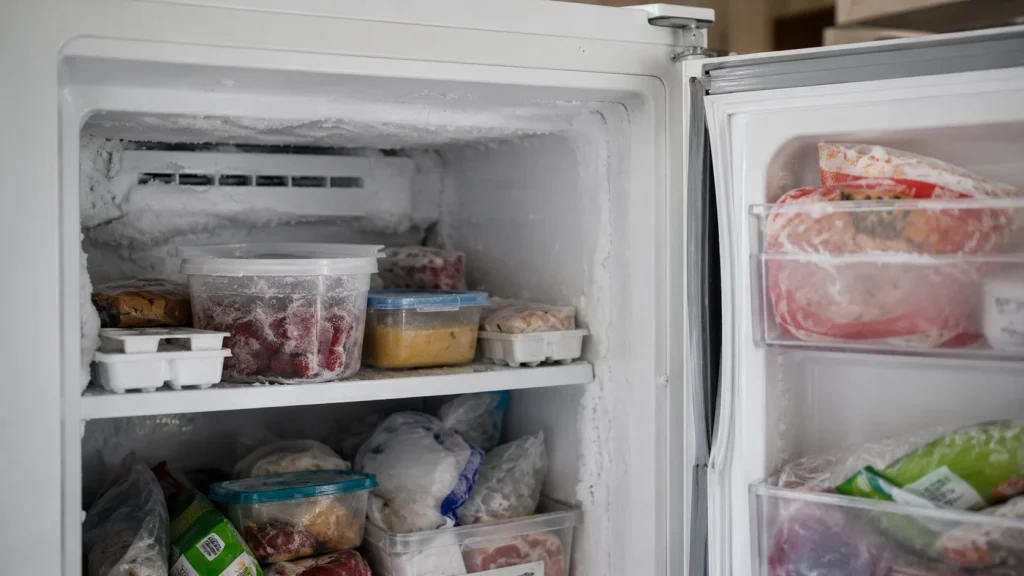
If you haven’t defrosted the freezer compartment in a while, you can unplug the appliance, allow the ice to melt naturally, and dry the interior completely. If heavy frost returns shortly afterward, it may indicate an underlying fault.
Refrigerator Making Unusual Noises
Every refrigerator makes some noise during normal operation. A gentle hum, occasional clicks, and the compressor switching on and off are all expected.
A refrigerator that never seems to stop running or suddenly starts buzzing, rattling, or knocking deserves closer attention.
Continuous running can mean the appliance is struggling to maintain its temperature. Dirty coils, restricted airflow, and a worn door seal are some of the common reasons.
Many homes throughout Durham Region keep a second refrigerator or freezer in a garage or basement. During winter, fluctuating temperatures in these areas can sometimes cause an appliance to run for longer periods without indicating a mechanical fault.
New or unusually loud mechanical noises should not be ignored. A fan blade rubbing against ice, a worn evaporator fan motor, or a failing compressor can all produce sounds that require further inspection.
Ice Maker Not Working
If your refrigerator has a built-in ice maker, poor ice production doesn’t always mean the appliance itself has failed. In many cases, the problem is related to the water supply or a simple maintenance issue.
Before scheduling a repair, check that:
- The water supply line is connected securely.
- The water line isn’t frozen or kinked.
- The water filter doesn’t need replacing.
- • The freezer is cold enough for the ice maker to operate correctly
These simple checks may restore normal ice production without the need for a repair.
When Should You Call a Professional?
Many refrigerator problems begin with routine maintenance issues that homeowners can safely deal with themselves. Checking the door seal, clearing excess frost, cleaning condenser coils, and making sure the vents are clear are all sensible first steps.
Some faults, however, involve electrical components, the sealed refrigeration system, or the compressor itself. These issues require specialist tools and should be diagnosed by a qualified appliance repair technician.
Professional diagnosis is recommended if you notice:
- An electrical burning smell.
- A power cord or plug becoming unusually warm.
- Heavy frost returning repeatedly after defrosting.
- Loud compressor noises.
- Food spoiling even though the controls appear to be set correctly.
If you notice any electrical warning signs, avoid attempting to diagnose or repair the appliance yourself.
Need Professional Appliance Repair?
Most refrigerator problems start with relatively minor issues such as poor airflow, dirty coils, frost buildup, or a worn door seal. Working through the basic checks above can sometimes resolve the problem or help you identify what may be wrong.
If your refrigerator still isn’t maintaining the correct temperature after these checks, the fault may involve components that require professional testing. Having the appliance inspected early can help prevent further damage, reduce food spoilage, and avoid more expensive repairs later.
Our team provides appliance repair services for homeowners across Oshawa, Bowmanville, Whitby, Ajax, Courtice, and the wider Durham Region. If the problem continues after these checks, you can learn more about our refrigerator repair services and the appliances we repair.
Frequently Asked Questions
A refrigerator that runs continuously without reaching the correct temperature is often affected by restricted airflow, dirty condenser coils, a damaged door seal, or a faulty thermostat. These problems can force the compressor to work longer without bringing the temperature down properly.
A blocked or frozen defrost drain is a common cause of refrigerator leaks. A damaged water line or a door seal that isn’t closing properly can also lead to excess moisture and water around the appliance.
A light layer of frost is normal. Thick ice that returns quickly usually indicates that warm air is entering the freezer or that the defrost system isn’t working correctly.
The repair time depends on the fault. Simple repairs, such as replacing a door seal or thermostat, can often be completed during a single visit. More complex issues involving the sealed refrigeration system may require additional time.
Many refrigerator faults are repairable and can cost considerably less than buying a replacement. Replacing the appliance generally makes more sense when an older refrigerator has a failed compressor or when the repair cost approaches the price of a new appliance.
If you’re unsure why your refrigerator or freezer isn’t keeping food properly cold, contact our team for professional appliance repair services across Durham Region. We’ll diagnose the problem, explain the cause, and recommend the most appropriate repair solution.